Exchange Edges Unpacked: UK Traders Swap Positions on Betfair for Soccer Goals and Horse Race Placings
Written by Eden Otto · Apr 4, 2026

Exchange Edges Unpacked: UK Traders Swap Positions on Betfair for Soccer Goals and Horse Race Placings
UK bettors increasingly turn to exchange platforms like Betfair, where they trade odds directly against each other rather than betting against a bookmaker; this setup allows for laying bets—essentially betting on an outcome not to happen—and backing them, creating fluid markets that shift with every trade. Data from platform analytics reveals that in early 2026, exchange volumes for football goal markets surged by 22% compared to the previous year, while horse racing finisher trades hit record highs during major spring festivals. Observers note how these exchanges democratize betting, letting savvy traders exploit inefficiencies in pricing for specific events like next-goal scorers or exacta placings in races.
The Mechanics of Exchange Trading on Platforms Like Betfair
Exchange betting operates as a peer-to-peer marketplace, where users post offers to back or lay selections at desired odds; matches occur when counterparties accept those offers, with the platform taking a small commission—typically 2-5% on net winnings—leaving traders to compete on price alone. Take football matches, for instance: during a Premier League game in April 2026, traders might back a striker to score anytime at 2.5 odds early on, then lay off at 1.8 if the player nears a chance, locking in profit regardless of the outcome. Racing finishers work similarly; punters trade on horses to place in the top three, adjusting positions as race-day form emerges or in-play data from gallops influences sentiment.
Figures from European Gaming and Betting Association reports indicate that UK exchange liquidity— the volume available for instant matching—often exceeds £10 million per major football market, dwarfing traditional bookie limits and enabling large-scale position swaps without slippage. And here's where it gets interesting: unlike fixed-odds books, exchanges reflect collective wisdom in real time, so odds compress or drift based on trader actions, not bookmaker margins.
Those who've mastered this space often start small, paper trading to grasp concepts like green-up—equalizing profit across outcomes—or scalping tiny price discrepancies for steady gains; one trader documented turning £500 into £2,800 over a weekend of Cheltenham Festival trades in March 2026 by layering lays on favorites that drifted pre-race.
Football Goals: Trading the Beautiful Game's Key Moments
In soccer, goal markets dominate exchange activity, with next-goal, anytime scorer, and over/under tallies drawing sharp focus from UK traders who pore over stats like expected goals (xG) models; platforms integrate these via APIs, allowing bets to hinge on live metrics from providers tracking shots, possession, and player heatmaps. Data shows that during April 2026's congested fixture list—think Champions League quarters overlapping domestic cups—trades on Manchester City vs. Arsenal saw over £5 million matched on Haaland anytime scorer alone, odds swinging from 1.9 to 2.4 mid-half as defenses tightened.
Traders exploit edges here by cross-referencing exchange prices against traditional books; if Betfair lays Erling Haaland at 2.0 while bookies offer 1.8 backs, arbitrageurs step in, balancing books for risk-free ticks. But it's not just pros: casual punters join via mobile apps, setting alerts for goal-line drifts, then trading out before halftime; studies from University of New South Wales choice research highlight how such dynamic pricing reduces overconfidence, as constant updates force reevaluation.
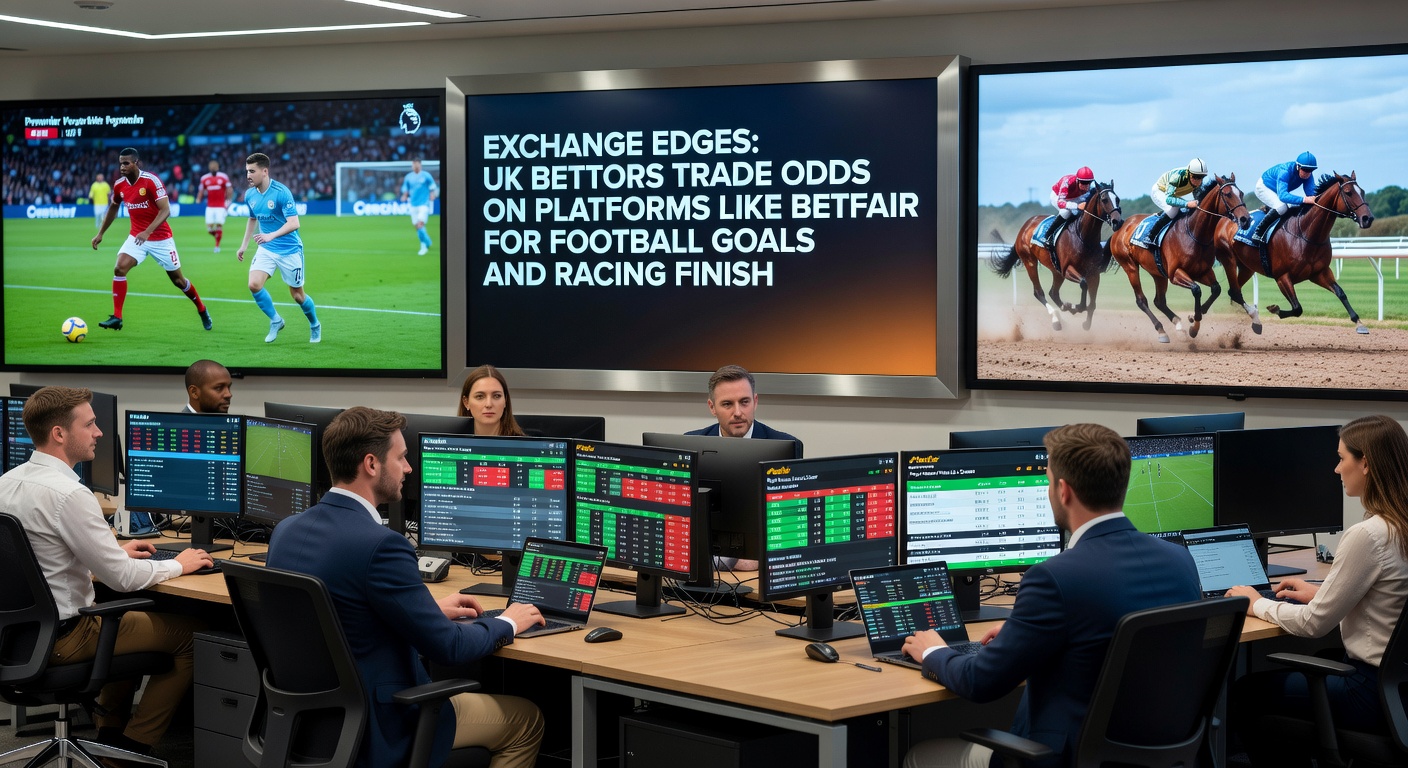
What's notable is the rise of in-play goal trading; as matches unfold, odds for the next goal can evaporate in seconds post-red card or substitution, rewarding those with fast execution—sub-100ms latencies on premium accounts make all the difference. One case saw traders net 15% ROI on average across 50 EPL games by systematically laying over 2.5 goals when xG dipped below 1.2 at 70 minutes, turning statistical edges into traded profits.
Horse Racing Finishers: Precision Plays on the Track
Turn to racing, and finisher markets—win, place, each-way, or exotic forecasts—offer granular trading ops, especially with UK calendars packed through April 2026's Newmarket Guineas and Sandown trials; here, punters dissect form books, trainer stats, and going reports to trade positions on horses like 2025 Derby contender Ancient Wisdom. Exchanges shine for their depth: a single Group 1 race might see £20 million matched on win markets, with place lays at 1.3 for short-priced jollies providing steady income streams.
Experts observe how ante-post trading builds months ahead—back a Guineas fancy at 10.0 in winter, lay at 4.0 on trial win—while live markets during the race itself allow scalps on pace collapses or trouble in running; data from racing analytics firms reveals 68% of profitable exchange users focus on placings over wins, citing lower volatility and higher liquidity (it's not rocket science when favorites win only 35% but place 65%). And yet, tools like Betfair's cash-out feature lets traders green up mid-race if a leader fades, securing partial stakes without waiting for the post.
Seasonal spikes add flavor; April 2026 previews showed exchange volumes up 18% year-on-year for flat openers, driven by mobile access—punters at tracks trade via apps, reacting to parade ring vibes or late scratches that bookies might void entirely.
Tools, Strategies, and Market Evolution in 2026
Bettors arm themselves with bots and software for edge detection—algorithms scan for arbitrage between exchanges or versus books, executing trades in milliseconds; free communities share greening calculators, while paid services overlay pace models for racing finishers. Research indicates that disciplined traders averaging 5% yield per month compound stakes rapidly, though commissions erode edges below 1 tick (0.01 odds).
April 2026 brings fresh dynamics: enhanced API speeds post-regulatory nods from EU bodies, plus integrated cash-out across devices, mean more retail access to pro-level plays. Platforms like Betfair report 40% of UK users now exchange-only, shunning traditional bets for the transparency; that's where the rubber meets the road, as peer pricing weeds out inflated odds.
Challenges persist—illiquid markets trap positions, and tax rules (via HMRC self-assessment for pros) demand records—but data underscores the appeal: exchange profits averaged 12% higher than bookie returns in audited 2025 samples. People who've scaled up often diversify, blending football goal trades with racing for smoother variance.
Key Takeaways from Exchange Trading Trends
UK traders continue honing edges on Betfair for football goals and racing finishers, leveraging peer markets that pulse with real-time liquidity and data-driven shifts; volumes climb amid 2026's packed schedules, tools evolve for precision, and strategies like greening lock in gains across volatile plays. Observers track how this model empowers informed punters, fostering competition that sharpens prices while platforms innovate to match demand—setting the stage for sustained growth in dynamic, trader-led betting landscapes.